— field note No. 10 —
Gondwana: southern continents in the age of dinosaurs
Short answer
Fit South America, Africa, Antarctica, Australia and the Indian subcontinent together like the shards of a broken plate and you have Gondwana. It began to come apart in the Jurassic, about 180 million years ago, and the break-up dragged on for more than a hundred million years: Australia and Antarctica finally parted company only after the dinosaurs had died out. As the land drifted apart, so did the animals living on it.
What the ancient map shows
Open the map of the ancient world and you will barely recognise the continents. Today’s coastlines can’t simply be carried back into the past. Sea levels rose and fell; some land was pushed up while other stretches sank beneath the water. A map like this is therefore a scientific reconstruction, not a snapshot.
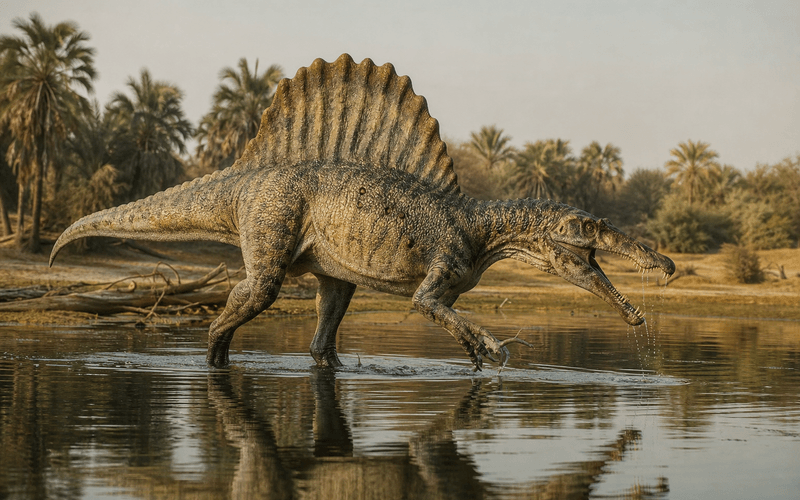
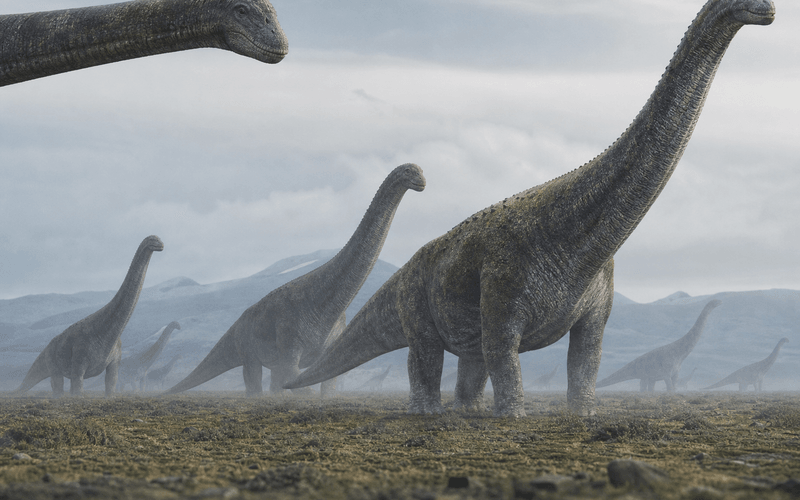
Gondwana ties together the stories of very different animals, such as South America’s Argentinosaurus and North Africa’s Spinosaurus. Both lived on southern land, but each in a world of its own: one in Patagonia, the other by the rivers of North Africa.
Why the southern dinosaurs were so varied
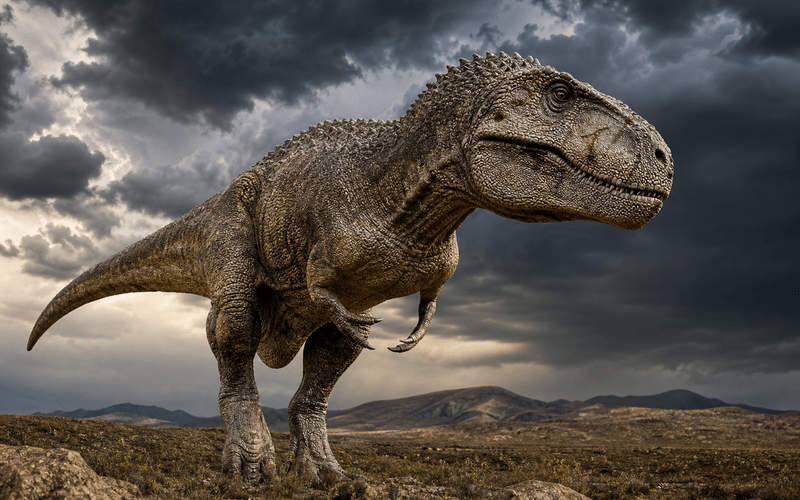
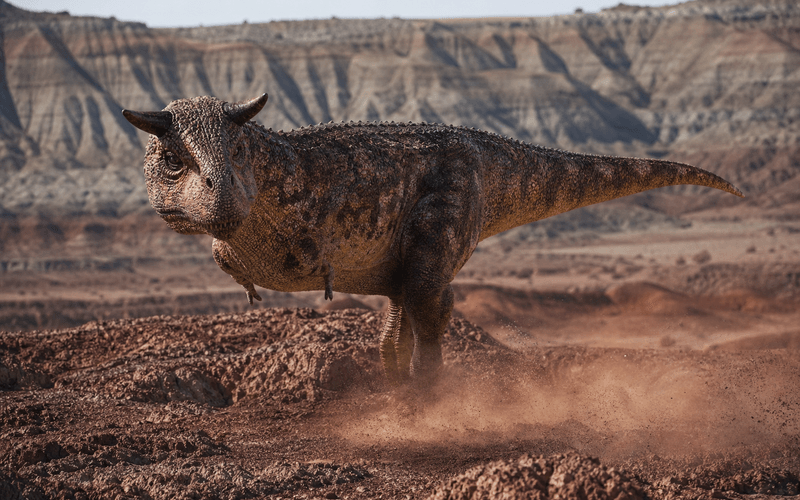
South America alone was home to predators of quite different builds, such as the huge Giganotosaurus and the horned Carnotaurus. They came from different groups and lived in different parts of the Cretaceous. The southern continents were never a nature reserve with one fixed set of species.
As Gondwana split, seas came between its parts, though some land connections held for a long time. Climate, vegetation and food all steered evolution. The first dinosaurs were long thought to have appeared here in the south and reached the north only later. Then a 2025 find from Wyoming, about 230 million years old, showed that they lived in the north almost as early, and the question of where dinosaurs first arose is open again.
How to read the map of finds
A marker on the map shows the region linked to finds of an animal from the catalogue. It doesn’t mean the animal lived on exactly that spot of some ancient shore. Our map is a sketch to help you get your bearings; anyone who wants to dig deeper will need geological maps and descriptions of the fossil sites.
And mind the date. The map shows Gondwana about 160 million years ago, a single frame from a very long film. Behind the familiar outlines lie tens of millions of years of change.
Questions and answers
What is Gondwana?
An ancient southern continent, often called a supercontinent. It included what would become South America, Africa, Antarctica, Australia and the Indian subcontinent, along with a number of smaller landmasses.
How is Gondwana different from Pangaea?
Pangaea brought together almost all the land on Earth. Gondwana is older: it took shape about 600–530 million years ago, long before the dinosaurs, later became part of Pangaea and went its own way again when Pangaea broke up.
Which dinosaurs lived on its lands?
Argentinosaurus, Giganotosaurus and Carnotaurus in South America, Spinosaurus in North Africa, and many others. They lived in different places and at different times.
Were there dinosaurs in Antarctica too?
Yes. In the Mesozoic it was much warmer there than it is now. Early Jurassic dinosaurs have been found in the Transantarctic Mountains: the predatory Cryolophosaurus, with a crest on its head, and the plant-eating Glacialisaurus. Finds are still few, because the ice gets in the way.