— field note No. 8 —
Triassic, Jurassic and Cretaceous: the three periods of the Mesozoic
Short answer
Tyrannosaurus lived closer in time to us than to Stegosaurus. That’s not a joke, just arithmetic. The Mesozoic Era lasted about 186 million years and is split into three periods: the Triassic, the Jurassic and the Cretaceous. In that time the dinosaurs appeared, Pangaea broke apart, and the plants and animals of the world were replaced several times over.
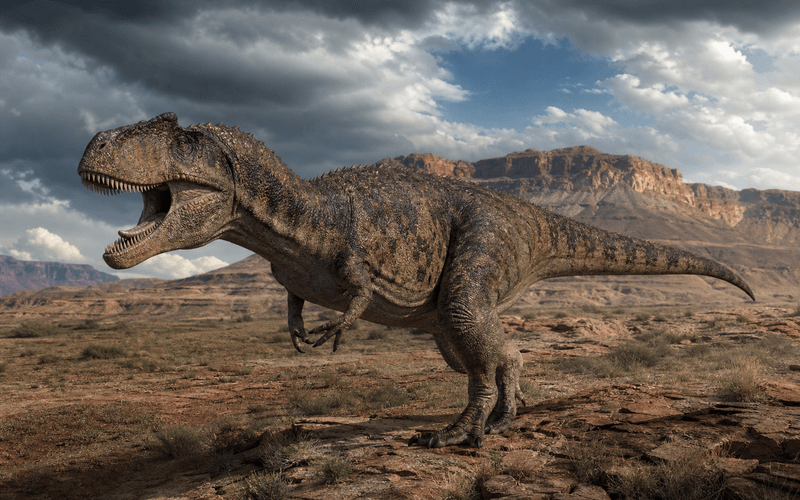
One era, three different worlds
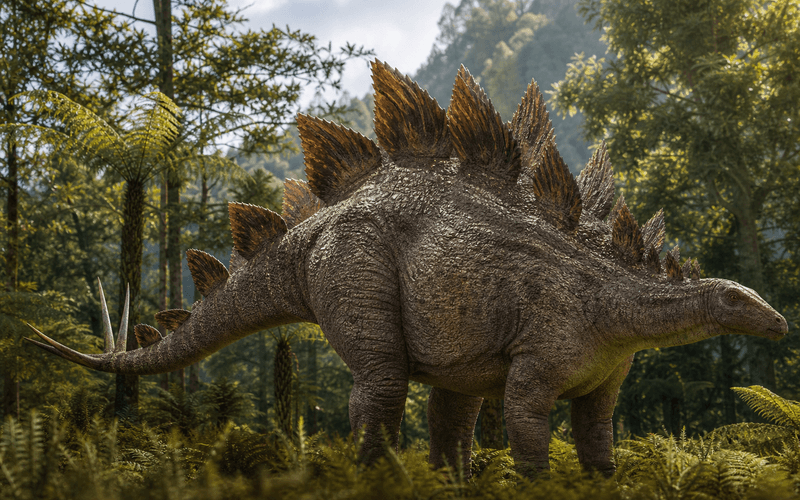
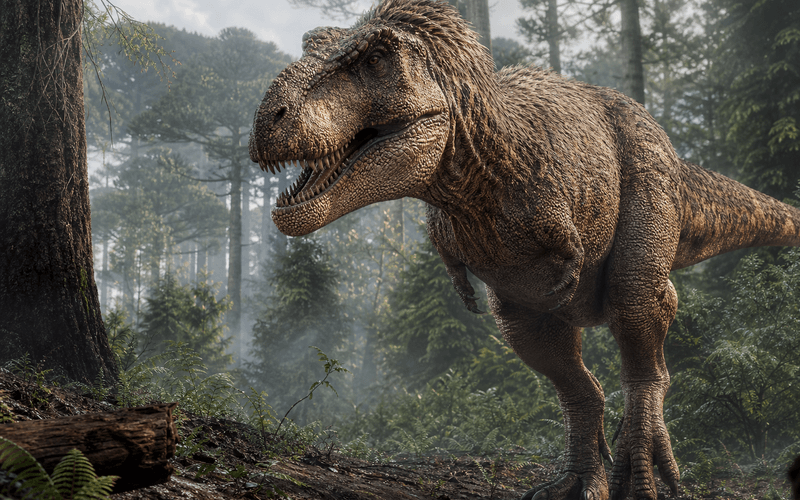
In films, dinosaurs from every age graze in the same meadow. In reality, more than 80 million years separate the Late Jurassic Stegosaurus from the Late Cretaceous Tyrannosaurus, which is more than separates Tyrannosaurus from you and me. The word “Mesozoic” covers a very long and very uneven history.
To keep your bearings, have the timeline of periods and the map of the ancient world to hand. The first shows what came after what. The second is a reminder that the continents haven’t always been where we are used to seeing them.
Triassic: the dinosaurs make their entrance
The Triassic lasted from roughly 252 to 201 million years ago. Almost all the land was gathered into a single supercontinent, Pangaea. Much of its interior, far from the ocean, was dry, though the climate naturally varied from one edge of it to another.
The oldest undisputed dinosaur remains date from the Late Triassic and are about 230 million years old; the group itself may have arisen a little earlier. Dinosaurs were not yet masters of the land and still played supporting roles. The Triassic was also when the first pterosaurs took to the air. The period closed with a mass extinction, and afterwards the cast of animals was a different one.
Jurassic: giants and the first birds
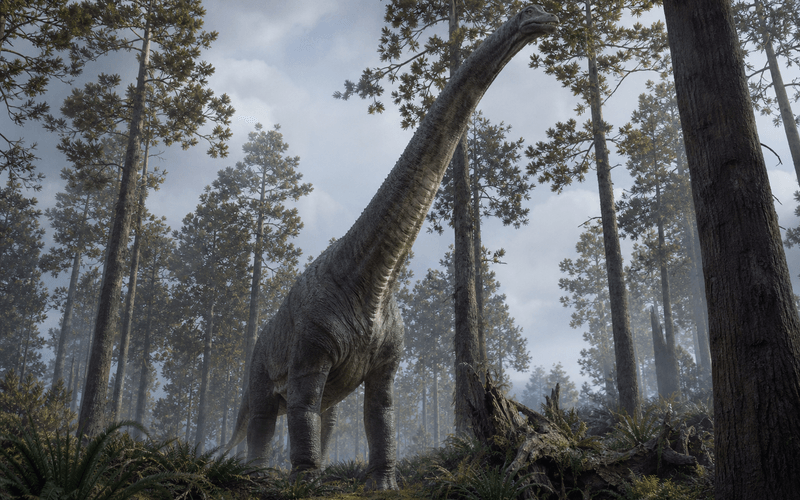
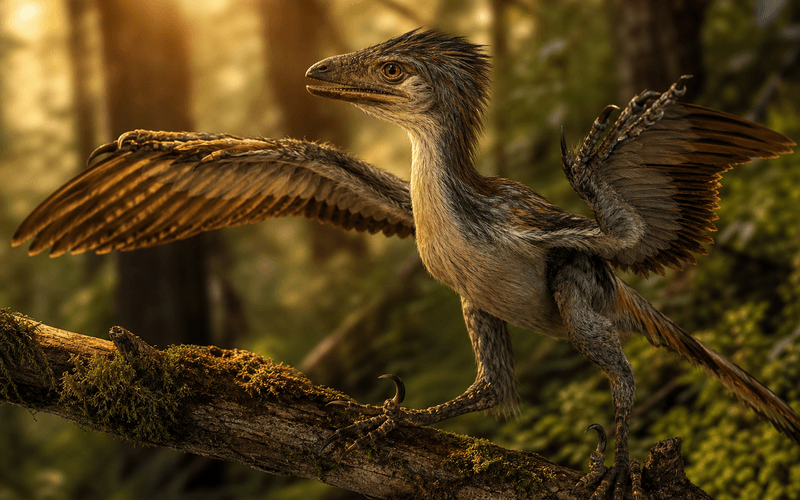
The Jurassic ran from about 201 to 143 million years ago. Its later part produced a whole gallery of celebrities: Brachiosaurus, Diplodocus, Stegosaurus and the predatory Allosaurus. Archaeopteryx lived then too, an early bird with features of the predatory dinosaurs. In 2025 another Jurassic bird, Baminornis, was described from China, and it already had a short tail like the birds of today.
Among the big predators of the time, Torvosaurus also deserves a mention. Pangaea meanwhile was splitting, and new seas opened between its pieces. Continents move slowly, but over millions of years that was enough to carry animals off to different shores.
Cretaceous: flowers, new faces and the end of an era
The Cretaceous, longest of the three, lasted from about 143 to 66 million years ago. In this period flowering plants spread widely across the land. Dinosaurs were plentiful and wonderfully varied, but the biggest stars, Tyrannosaurus and Triceratops, only appeared just before the curtain fell.
It fell 66 million years ago. A mass extinction at the Cretaceous–Palaeogene boundary wiped out every non-avian dinosaur; what exactly happened is told in our field note on the extinction of the dinosaurs. Birds came through the catastrophe, the only branch of the dinosaurs to have lasted to the present day.
Questions and answers
Which period of the Mesozoic was the longest?
The Cretaceous, at about 77 million years. The Jurassic lasted about 58 million and the Triassic about 50. These boundaries are rounded.
Did Tyrannosaurus and Stegosaurus live at the same time?
No. Stegosaurus is known from the Late Jurassic, Tyrannosaurus from the very end of the Cretaceous. More than 80 million years lie between them.
When did the first dinosaurs appear?
The oldest undisputed dinosaurs are 230–233 million years old, from the Late Triassic, and the group itself is probably a little older. In 2025 a small dinosaur about 230 million years old, Ahvaytum, was described from Wyoming. So dinosaurs lived in the north of Pangaea almost as early as in the south.
What are the spikes on a Stegosaurus’s tail called?
A thagomizer. The word was coined in 1982 by the cartoonist Gary Larson. Palaeontologists picked it up as a joke, and now it appears in scientific papers and museum displays.