— field note No. 2 —
Velociraptor: the real predator versus the screen version
Short answer
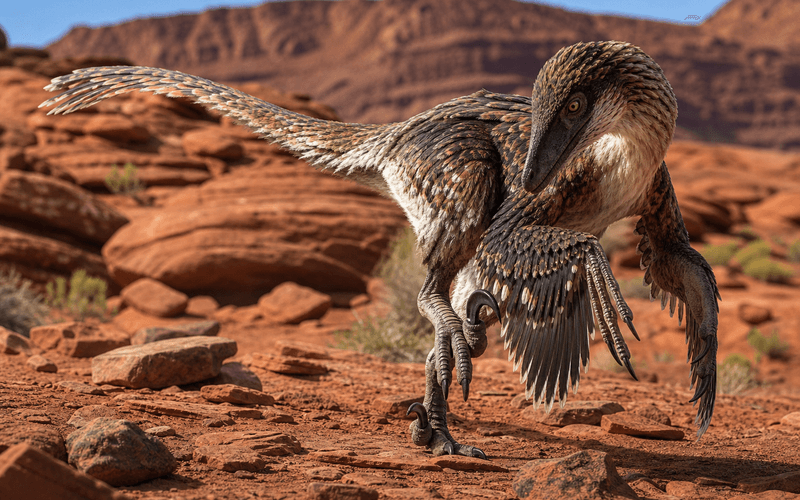
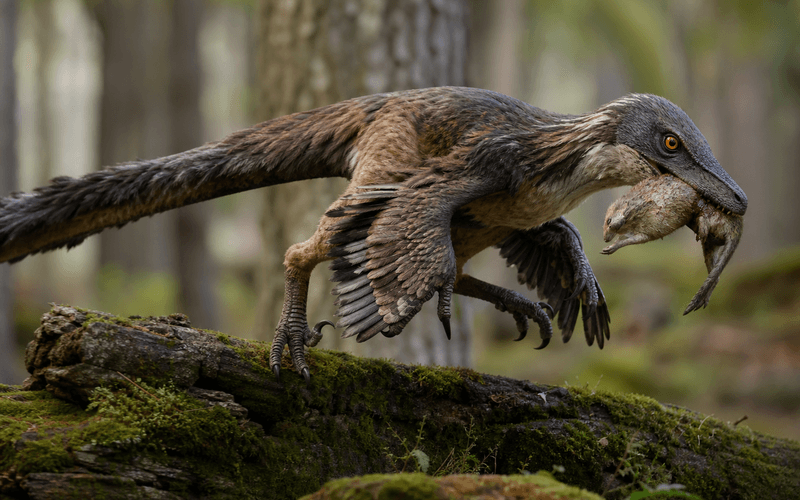
A cinema-goer who met a real Velociraptor wouldn’t recognise it. This predator came up to an adult’s knee: two metres long including the tail and half a metre tall at the hip. It was covered in feathers, too, even though it couldn’t fly. About all that survives of the screen version is the big curved claw on each hind foot.
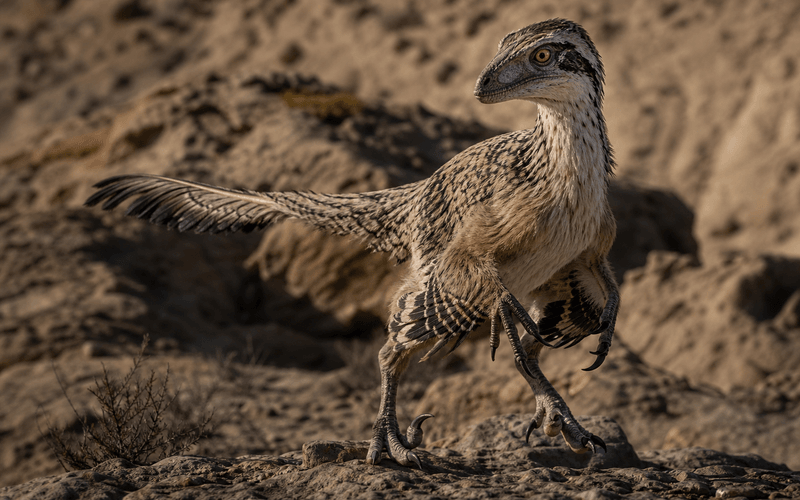
A predator the size of a dog
Two metres sounds a lot, but in Velociraptor most of that was neck and tail; the body itself was small. It weighed 15–20 kilograms, the biggest individuals a little more, which puts it on a par with a medium-sized dog. The man-sized hunter of Jurassic Park shares little with it beyond the name.
The long tail served as a counterbalance. On the second toe of each hind foot sat a large sickle-shaped claw. One hypothesis is that it was used to pin down struggling prey.
How we know about the feathers
In 2007 a row of small bumps was spotted on a Velociraptor ulna, one of the forearm bones. Modern birds have the same bumps, called quill knobs, and anchor their feathers to them. The feathers themselves didn’t survive on this specimen, but the knobs are evidence enough, especially as the plumage of its close relatives is known from impressions.
Velociraptor belongs to the dromaeosaurid family. Our catalogue has two more of the family, Deinonychus and Utahraptor, both noticeably bigger. Relatives, not twins: they differed in size and lived at different times.
A fight frozen in the sand
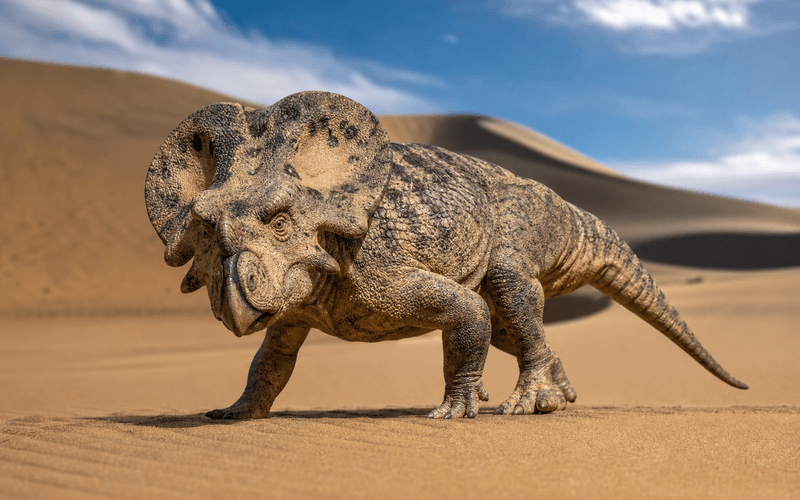
The most famous find from Mongolia is a pair of skeletons locked together, a Velociraptor and a Protoceratops. They became known, fittingly, as the “Fighting Dinosaurs”. A palaeontologist nearly always finds an animal; here the rock has kept an event, and the position of the bones shows the two of them struggling.
Most likely both were buried by sand in the middle of the fight. What started it and who attacked first, the bones can’t say. The fight itself is a fact. Anything beyond that would be storytelling.
Where the film version came from
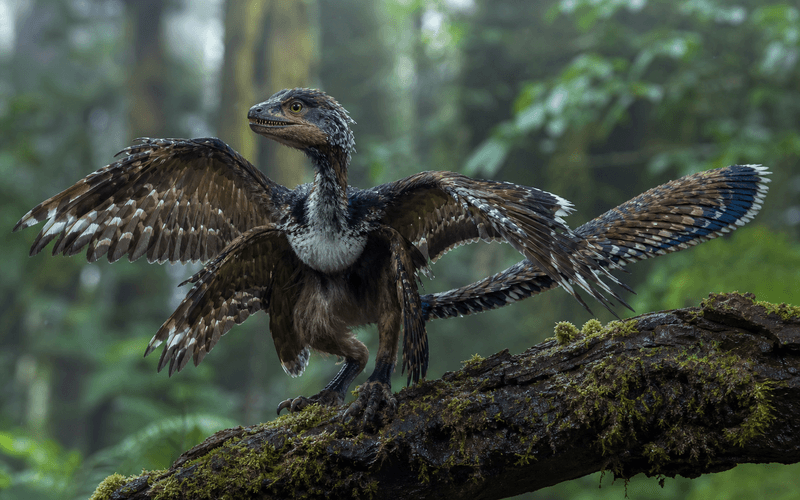
In size, the screen “raptors” are closer to Deinonychus than to Velociraptor. And for years they were shown without a single feather. For a clue to how this family might really have been dressed, look at Microraptor: it had long feathers even on its hind legs.
Well-drilled pack hunting is another script device rather than an established fact. We know far less about the habits of extinct predators than about their skeletons. Several individuals found close together don’t prove that they hunted together in life.
Questions and answers
How big was Velociraptor?
About two metres long including the tail and roughly half a metre tall at the hip. It weighed 15–20 kilograms.
Did it have feathers?
Yes. Its ulna carries the knobs where feathers were attached, just like those of modern birds.
Why is it so big in the films?
The screen “raptor” is closer to Deinonychus, a larger relative. The real Velociraptor was a much more modest animal.
What was the sickle claw for?
Most likely for holding on to prey. Exactly how it was used is still being worked out.